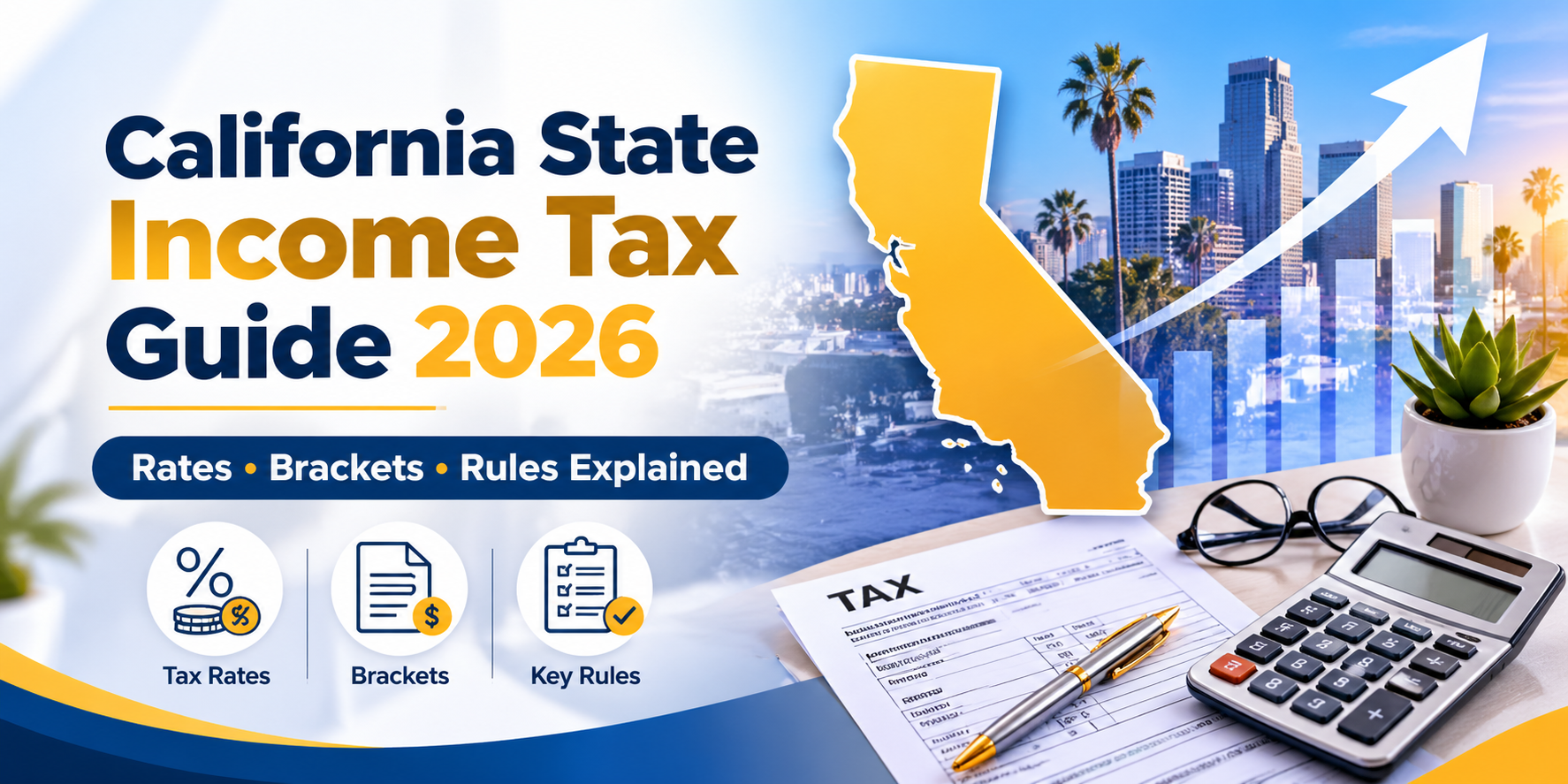
If you live, work, or do business in California, the California State Income Tax Guide for 2026 is a must-have. California has one of the most progressive and complex tax systems in the United States. So it is very hard for everyone to understand all the tax rules and regulations. That is why we have created the California State Income Tax Guide for 2026 for you, so you can get an idea of how rates, brackets, and rules apply to your income.
Whether you are a salaried employee, freelancer, investor, or business owner, understanding how California taxes work can help you plan more effectively and avoid unnecessary penalties. In this guide, we break down California state income tax rates, explain how tax brackets function, and highlight the most important rules you need to follow in 2026.
What is California State Income Tax?
The Franchise Tax Board imposes California state income tax on individuals and businesses that earn income in the state. This applies not only to residents but also to people who are not residents of the state but work and earn income from the state’s sources. The system is progressive, which means if your income increases, the tax rate on that income will also increase.
This also means that people with high incomes pay higher income tax than low-income earners. California’s tax system differs from other states’ because it does not offer a flat tax rate, making tax planning more important.
California State Income Tax Guide 2026
In this California state income tax guide, we will share detailed information regarding:
- Tax Rates
- Tax Brackets
- Taxable Income
- Standard Deduction vs Itemized Deductions
- California Tax Credits
- Tax Planning Strategies
- Common Tax Filing Mistakes
California State Income Tax Rates for 2026
California income tax rates range from 1 percent to 13.3 percent, depending on your income level and filing status. These rates are among the highest in the country, particularly for high earners.
Key Rate Insights:
- 1 percent applies to the lowest income bracket
- Rates gradually increase across multiple brackets
- The top rate of 13.3 percent applies to high-income individuals
- An additional mental health services tax is included for top earners
It is important to note that California does not have separate tax rates for different income types, such as capital gains. All income is generally taxed at the same rate.
Understanding California Tax Brackets
In California, there are tax brackets that determine how your income is taxed in layers. Here, your entire income is not taxed at a single rate; it is divided into separate portions, each taxed at a specific rate.
How it Works
If you move into a higher tax bracket, then only the income within that bracket is taxed at the higher rate. The rest of your income remains taxed at lower rates.
Filing Status Categories:
- Single
- Married filing jointly
- Married filing separately
- Head of household
Each category has different income thresholds, which means your filing status can significantly impact your tax bill.
What Income is Taxable in California?
California taxes nearly all forms of income, making it one of the broadest tax systems in the United States.
Common Taxable Income Includes:
- Salaries and wages
- Self-employment and freelance income
- Rental income
- Capital gains from investments
- Bonuses, commissions, and tips
If you are a California resident, you are taxed on your worldwide income. Non-residents, however, are taxed only on income earned in California.
Standard Deduction vs Itemized Deductions
When filing taxes, you have the option to reduce your taxable income through deductions. You can either take the standard deduction or itemize your deductions.
1. Standard Deduction
This is a fixed amount that reduces your taxable income and is easier to claim.
2. Itemized Deductions
These include specific expenses such as:
- Mortgage interest
- Medical expenses
- Charitable donations
For many taxpayers, especially high-income individuals and homeowners, itemizing deductions can yield greater tax savings.
California Tax Credits You Should Know
You must know about tax credits that help you reduce the amount of tax you owe. These tax credits are more valuable than tax deductions.
Popular California Tax Credits:
- California Earned Income Tax Credit (CalEITC)
- Young Child Tax Credit
- Child and Dependent Care Credit
Most tax credits are designed for low- and middle-income households, but eligibility depends on income and other criteria.
Key California Tax Rules for 2026
California has different tax rules, and if you understand them properly, they can be very helpful in avoiding penalties and ensuring compliance.
- Residency Rules: If you are a California resident, all your income is taxable, regardless of where it is earned.
- Capital Gains Tax: In California, capital gains are taxed as regular income. If you gain significant profits from your investments, your tax rate can also increase.
- Estimated Tax Payments: Freelancers, contractors, and business owners must make quarterly estimated tax payments to avoid penalties.
- Filing Deadlines: California tax deadlines generally align with federal deadlines, but extensions may apply in special cases.
- Penalties and Interest: Late filing or underpayment of taxes can result in penalties and interest, increasing your overall tax burden.
How High-Income Earners are Taxed in California
California is known for its high tax rates for wealthy people. If you fall into a higher income bracket, then due to the progressive structure, effective tax rates can be significantly higher.
High-income earners should focus on:
- Strategic tax planning
- Investment timing
- Utilizing deductions and credits
- Structuring income efficiently
We suggest you do proper tax planning; otherwise, taxes can take a significant portion of your income.
Tax Planning Strategies for 2026
Proper tax planning is essential to reduce your liability and stay compliant with California laws.
Effective Strategies:
- Maximize retirement contributions
- Take advantage of available tax credits
- Track all deductible expenses
- Plan capital gains and losses carefully
- Structure your business entity wisely
Working with a professional CPA can help identify opportunities that are often overlooked.
Why You Should Work with a Tax Professional
California tax laws are complex and frequently updated. A small mistake in your tax return can lead to audits, penalties, or missed savings opportunities.
An experienced CPA, such as Eric M Hunt, CPA, can help you:
- File accurate tax returns
- Minimize tax liability
- Stay compliant with state and federal laws
- Plan for future tax savings
This is especially important for business owners, freelancers, and individuals with multiple income streams.
Common Tax Filing Mistakes to Avoid
As we know, tax rules are very complex, many taxpayers make avoidable mistakes that can lead to penalties or delays.
Common Errors:
- Reporting incorrect income
- Missing deductions or credits
- Filing under the wrong status
- Failing to pay estimated taxes
- Missing deadlines
If you avoid these mistakes, yous you can save both time and money.
Conclusion
This detailed blog post on the California State Income Tax Guide for 2026, which clearly explains the importance of understanding tax rates, brackets, and rules. California tax systems require careful and proper tax planning and attention due to their wide range of taxable income categories.
Before filing the tax, you can stay informed about the tax rules and guidance in California by reading our detailed guide. With this guide, you can choose the right deductions, and you can reduce your tax burden and ensure compliance.
You can also work with a qualified tax professional like Eric M Hunt, CPA, so you can pay your taxes without any headaches and save money on taxes.
Whether you are an individual taxpayer or a business owner, proactive tax planning is the key to financial success in California.
FAQs
1. What is the California income tax rate for 2026?
It ranges from 1 percent to 13.3 percent based on income.
2. Does California tax capital gains separately?
No, capital gains are taxed as regular income.
3. Who must file California state taxes?
Anyone earning income in California or residing in the state.
4. Do freelancers need to pay quarterly taxes in California?
Yes, estimated tax payments are required.
5. How can I reduce my California tax liability?
By using deductions, credits, and proper tax planning.